

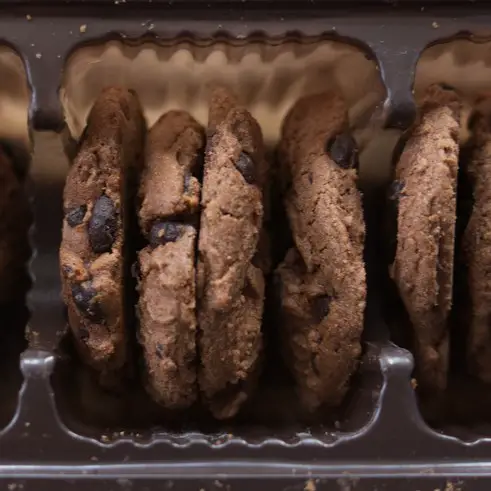
We all love a good cookie, don’t we? That perfect blend of sweetness, crunch, and comfort that takes us back to childhood with just one bite. But here’s the catch – not all cookies are created equal, especially when it comes to those packaged varieties lining supermarket shelves. You might think you’re treating yourself to a delightful snack, but in reality, you could be biting into a disappointing mix of artificial flavors, unhealthy fats, and enough sugar to make your dentist cringe. Let’s pull back the curtain on these deceptive delights and explore the worst packaged cookies lurking in your local supermarket. Warning: This exposé might just crumble your cookie-loving world!
1. Chips Ahoy! Chewy Brownie-Filled Cookies
Oh, Chips Ahoy! How you’ve led us astray with your tempting promises of chocolatey goodness. These brownie-filled monstrosities might sound like a dream come true, but they’re more of a nutritional nightmare. Each serving packs a whopping amount of calories, fat, and sugar that would make even the most indulgent dessert blush. And let’s not even get started on the ingredient list – it’s longer than a CVS receipt and filled with more unpronounceable additives than a chemistry textbook.
But it’s not just the nutritional profile that’s cause for concern. The texture of these cookies is about as far from homemade as you can get. Instead of that perfect balance of crisp exterior and gooey interior, you’re met with a strange, chewy consistency that’s more reminiscent of a rubber eraser than a delectable treat. And the brownie filling? It’s less “rich and decadent” and more “vaguely chocolate-flavored paste.”
Perhaps the most disappointing aspect of these cookies is how they manage to make something as universally beloved as chocolate chip cookies taste so… meh. It’s as if they’ve taken all the joy out of the classic treat and replaced it with a bland, overly sweet imitation. If cookies could have an identity crisis, these would be the poster child. Save yourself the disappointment (and the sugar crash) and give these a wide berth in the cookie aisle.
2. Oreo Mega Stuf
Ah, Oreos – the classic cookie that’s been a staple in households for generations. But someone at Nabisco decided that regular Oreos just weren’t enough, and thus, the Oreo Mega Stuf was born. It’s like they took the “everything in moderation” rule and tossed it out the window along with any semblance of balance. These cookies are the culinary equivalent of shouting “MORE!” at the top of your lungs while standing on a mountain of cream filling.
Let’s talk about that filling for a moment, shall we? It’s less a creamy delight and more a sugary assault on your taste buds. The sheer amount of it throws off the entire cookie-to-cream ratio that made the original Oreo so perfect. It’s like trying to eat a sandwich where the bread is merely a suggestion and the filling is the main event. And don’t even get me started on the mess – you practically need a hazmat suit to eat these without ending up covered in white, sticky goo.
But the real kicker? The nutritional content. These cookies are a veritable sugar bomb, with enough calories, fat, and carbs to make your pancreas wave a white flag in surrender. The ingredient list reads like a who’s who of processed food villains, featuring palm oil, artificial flavors, and enough sugar to make Mary Poppins rethink her stance on a spoonful helping the medicine go down. If you’re looking for a quick way to blow your daily calorie budget on a single snack, well, congratulations – you’ve found it!
3. BelVita Cranberry Orange Crunchy Breakfast Biscuits
Oh, BelVita, you sneaky devil. Masquerading as a healthy breakfast option when you’re really just a cookie in disguise. These “breakfast biscuits” are the wolf in sheep’s clothing of the cookie world. They lure you in with promises of whole grains and fruit, making you feel virtuous as you reach for them instead of that doughnut. But don’t be fooled – these crunchy little deceivers are far from the nutritional powerhouse they claim to be.
Let’s start with the sugar content, shall we? These biscuits pack enough sweetness to make your morning coffee jealous. And here’s the kicker – most of that sugar isn’t coming from the fruit they so proudly advertise. No, it’s good old-fashioned added sugar, the kind that nutritionists warn you about. It’s like they took a perfectly good idea for a healthier cookie and then decided to dunk it in a vat of sugar just for kicks.
But wait, there’s more! These biscuits are also carb central. Now, I’m not saying carbs are the enemy, but when you’re starting your day with a carb load that rivals a pre-marathon pasta party, you might want to reconsider your choices. And let’s not forget the texture – these things are so crunchy they could probably double as roof tiles in a pinch. By the time you’re done eating them, your jaw has had more of a workout than it would get from chewing on a piece of leather.
4. Famous Amos Chocolate Chip Cookies
Ah, Famous Amos – the cookies that prove fame doesn’t always equate to quality. These tiny disappointments have been masquerading as a satisfying snack for far too long. At first glance, they seem harmless enough – bite-sized chocolate chip cookies that promise a quick and easy treat. But don’t let their diminutive size fool you; these little devils pack a caloric punch that’s anything but small.
Let’s talk about portion sizes for a moment. Famous Amos cookies are so small that eating just one feels like a cruel joke. But here’s the rub – their size makes it all too easy to mindlessly munch through half a bag before you even realize what’s happening. It’s like they were designed by some evil genius who wanted to create the potato chip of the cookie world. Before you know it, you’ve consumed enough calories to fuel a small army, all while feeling like you’ve barely had a snack.
But it’s not just the deceptive serving size that lands Famous Amos on our naughty list. The texture of these cookies is about as appealing as cardboard that’s been left out in the rain. They’re dry, crumbly, and have all the moisture of the Sahara Desert. And don’t even get me started on the chocolate chips – or should I say, the microscopic specks of brown that vaguely resemble chocolate. It’s as if someone waved a chocolate bar in the general direction of the cookie dough and called it a day. If you’re looking for a truly satisfying chocolate chip cookie experience, you’d be better off licking a chocolate-scented air freshener.
5. Mrs. Fields Triple Chocolate Cookies
Mrs. Fields, oh Mrs. Fields, how you’ve let us down. These Triple Chocolate Cookies sound like a chocoholic’s dream come true, but they’re more of a nutritional nightmare. It’s as if someone decided to see just how much chocolate and sugar they could cram into a single cookie before it collapsed under its own decadence. Spoiler alert: it’s a lot.
Let’s break down this chocolatey disaster, shall we? First, we have the calorie count, which is high enough to make a marathon runner think twice. Then there’s the fat content – and not the good kind of fat that nutritionists are always raving about. No, we’re talking about saturated fat, the kind that cardiologists warn you about in hushed, worried tones. And the cherry on top of this unhealthy sundae? Partially hydrogenated palm kernel oil, because apparently, regular palm oil just wasn’t unhealthy enough.
But perhaps the most egregious offense of these cookies is how they manage to take something as universally beloved as chocolate and turn it into a cloying, overly sweet mess. It’s like they took the concept of “death by chocolate” a little too literally. The flavor is less “rich and indulgent” and more “I just ate a spoonful of cocoa powder mixed with sugar.” And the texture? It’s a far cry from the soft, gooey cookies that made Mrs. Fields famous in the first place. These packaged versions are more likely to leave you reaching for a glass of water than sighing with satisfaction.
6. Little Debbie Oatmeal Creme Pies
Oh, Little Debbie, you sly minx. You’ve been charming us with your cute pigtails and promise of homestyle goodness for years. But let’s be real – these Oatmeal Creme Pies are about as close to homemade as a plastic plant is to a real flower. These snack cakes (because let’s face it, calling them cookies is a stretch) are a perfect storm of nutritional no-nos.
First off, let’s talk about that ingredient list. It reads like a chemistry experiment gone wrong. High fructose corn syrup? Check. Partially hydrogenated oils? You bet. Artificial flavors and colors? Of course! It’s like they took everything nutritionists warn us about and decided to throw a party in a plastic wrapper. And don’t even get me started on the sodium content – these things are salty enough to make the Dead Sea feel insecure.
7. Nilla Wafers
Ah, Nilla Wafers – the cookies that have somehow convinced generations of snackers that they’re a wholesome treat. But let’s pull back the curtain on these bland little discs of disappointment, shall we? First off, let’s address the elephant in the room – or should I say, the vanilla that isn’t in the room. Despite their name, these wafers have about as much real vanilla flavor as a piece of cardboard.
But it’s not just the lack of flavor that lands Nilla Wafers on our naughty list. Oh no, these innocuous-looking cookies are a nutritional minefield. They’re basically little sugar bombs masquerading as a sensible snack. And let’s talk about that texture, shall we? They’re dry enough to make the Sahara look like a tropical rainforest. Eating them without a glass of milk nearby is a choking hazard waiting to happen.
And here’s the real kicker – these cookies are so utterly boring that they can’t even stand on their own. They need to be crushed up and mixed into other desserts just to be palatable. It’s like they’re the culinary equivalent of a bland supporting actor who never gets a starring role. If you’re reaching for Nilla Wafers as a snack, you might as well just eat the box they came in – at least that might have some fiber.
Well, folks, there you have it – a not-so-sweet exposé of the cookie aisle’s biggest offenders. From deceptive health claims to sugar bombs in disguise, these packaged disappointments prove that not all that glitters is gold (or delicious). The next time you find yourself prowling the supermarket for a sweet treat, remember this cautionary tale. You might just save yourself from a mouthful of regret and a pantry full of culinary criminals. And hey, if all else fails, there’s always the produce section – I hear apples are nature’s cookies. Well, maybe not, but at least they won’t leave you feeling like you’ve just eaten a bowl of sugary chalk dust!

