

You’ve seen them spinning on their spits, golden and glistening, tempting you with their savory aroma. Rotisserie chickens are the unsung heroes of quick weeknight dinners and last-minute meal solutions. But have you ever wondered why these perfectly roasted birds are often cheaper than their raw counterparts? The truth behind your favorite convenient meal might just ruffle your feathers. From clever marketing ploys to questionable sourcing practices, the rotisserie chicken industry is hiding some finger-lickin’ secrets. Let’s carve into the juicy details that grocery stores and big-box retailers don’t want you to know about their rotisserie chickens.
1. The Loss Leader Strategy
Ever wondered why that mouth-watering rotisserie chicken is so darn cheap? Well, it’s not out of the goodness of the store’s heart. These birds are what’s known in the retail world as “loss leaders.” This means that stores are willing to sell them at a loss to lure you into the store. It’s a clever marketing tactic that plays on your hunger and your wallet.
Think about it: you go in for a $5 chicken, and suddenly you’re walking out with a cart full of sides, drinks, and desserts. The store might lose a buck or two on the chicken, but they’ve just made a hefty profit on everything else you’ve picked up. It’s a psychological game, and we’re all pawns in this poultry-powered plot.
This strategy is so effective that some stores, like Costco, have gone to extraordinary lengths to keep their rotisserie chicken prices low. Costco even opened its own massive poultry processing plant in Nebraska just to ensure they can keep selling their famous $4.99 chickens. Talk about commitment to the cause!
2. The Expiration Date Shuffle
Here’s a tidbit that might make you squawk: that delicious rotisserie chicken you’re eyeing might have been destined for the dumpster just hours ago. Many grocery stores use their rotisserie ovens as a last resort for raw chickens that are about to expire. It’s a clever way to avoid food waste and turn potential losses into profits.
While this practice isn’t necessarily harmful – after all, cooking kills bacteria – it does feel a bit like a bait-and-switch. You think you’re getting a premium product, but in reality, you’re helping the store clear out its aging inventory. It’s not exactly false advertising, but it’s certainly not something they’re crowing about in their marketing materials.
And it doesn’t stop there. If those rotisserie chickens don’t sell by the end of the day, they might find new life in the deli section. That chicken salad or sliced meat in the case? It could very well be yesterday’s unsold rotisserie chicken in disguise. Talk about a poultry phoenix rising from the ashes!
3. The Sodium Situation
If you’ve ever wondered why store-bought rotisserie chicken tastes so darn good, here’s a not-so-secret ingredient: salt. And lots of it. These birds are often pumped full of sodium to enhance flavor and extend shelf life. It’s a one-two punch of deliciousness and preservation that keeps you coming back for more.
But this salty situation comes at a cost to your health. A single serving of rotisserie chicken can contain up to a third of your recommended daily sodium intake. For those watching their salt intake or with certain health conditions, this hidden sodium bomb could be a real problem. It’s not just about taste – it’s a sneaky way to make you crave more and keep you hooked on their product.
And it’s not just salt. Many rotisserie chickens are injected with a cocktail of additives, including sugar, natural flavorings, and sometimes even artificial colors. These extras help create that perfect golden-brown skin and juicy meat we’ve come to expect. But they also turn what should be a simple, healthy protein into a more processed food item.
4. The Size Deception
Have you ever noticed that rotisserie chickens seem a bit… smaller than their raw counterparts? You’re not imagining things. Many stores use smaller birds for their rotisserie offerings. This isn’t just to save on costs (although that’s certainly part of it). It’s also because smaller chickens cook more evenly and quickly, ensuring a constant supply of ready-to-eat birds.
But this size difference means you’re getting less meat for your money. A typical rotisserie chicken might weigh between 2 to 3 pounds, while a raw whole chicken could easily be 4 to 5 pounds. So while that $5 rotisserie chicken seems like a steal, you might actually be getting a better value by buying a larger raw chicken and roasting it yourself.
Of course, the convenience factor of a ready-to-eat chicken is hard to beat. But it’s worth considering whether that convenience is worth the trade-off in quantity. Plus, roasting your own chicken gives you control over the seasonings and cooking method, allowing you to create a healthier, more personalized meal.
5. The Ethical Dilemma
Behind the scenes of your convenient rotisserie chicken lies a more sobering reality. The demand for cheap, readily available rotisserie chickens has led to some questionable practices in chicken farming and processing. Many of these birds are raised in cramped, confined conditions with little to no outdoor access.
The push for larger, faster-growing chickens has also led to welfare concerns. These birds often grow so quickly that their legs can’t support their body weight, leading to painful leg deformities and other health issues. It’s a high price for the chickens to pay for our convenience.
And it’s not just about animal welfare. The workers in these massive poultry processing plants often face challenging conditions, including long hours, repetitive tasks, and potential exposure to harmful chemicals. Some facilities have even been accused of using illegal child labor. It’s a stark reminder that our food choices have far-reaching consequences beyond our dinner plates.
6. The Temperature Tango
Ever notice how those rotisserie chickens are always toasty warm when you pick them up? Well, here’s a hot tip: that warmth might be hiding a cold, hard truth. Some stores have been caught playing fast and loose with food safety temperatures, keeping chickens in the danger zone where bacteria can thrive.
The ideal holding temperature for hot foods is 140°F (60°C) or above. Anything below that for extended periods can turn your dinner into a bacterial playground. But maintaining this temperature while keeping the chicken moist and appetizing is a delicate balance. Some stores cut corners, risking food safety for the sake of appearance and taste.
So, next time you grab a warm rotisserie chicken, consider how long it might have been sitting there. If it feels barely warm to the touch, it might be wise to give it a pass. Your taste buds might be disappointed, but your stomach will thank you later.
7. The Packaging Problem
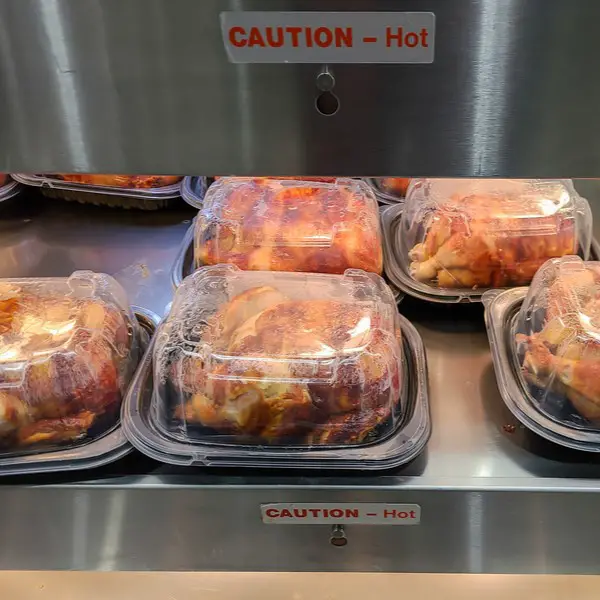
Let’s talk about the elephant in the room – or rather, the plastic clamshell on your kitchen counter. The packaging used for rotisserie chickens is a environmental nightmare. These containers are often made from materials that are difficult or impossible to recycle, contributing to the growing problem of plastic waste.
Some stores are starting to address this issue. Costco, for instance, has been transitioning to plastic bags instead of clamshell containers for their rotisserie chickens. While this is a step in the right direction, it’s still far from a perfect solution. The convenience of grab-and-go chickens comes with a hefty environmental price tag.
Moreover, these plastic containers can leach chemicals into your food, especially when the chicken is still hot. While the levels are generally considered safe, it’s yet another hidden cost of convenience that consumers should be aware of. It’s a classic case of out of sight, out of mind – but the impact of all this plastic doesn’t disappear just because we toss it in the trash.
So there you have it, folks – the clucking truth about rotisserie chickens. From sneaky marketing tactics to questionable sourcing practices, these convenient birds come with a side of secrets. But don’t let this ruffle your feathers too much. Armed with this knowledge, you can make more informed choices about your poultry purchases. Whether you decide to stick with the rotisserie convenience or spread your wings and roast your own bird, at least now you know what’s really going on behind those spinning glass doors. Just remember, in the world of rotisserie chickens, what you see isn’t always what you get – but hey, ignorance was bliss, wasn’t it?

