

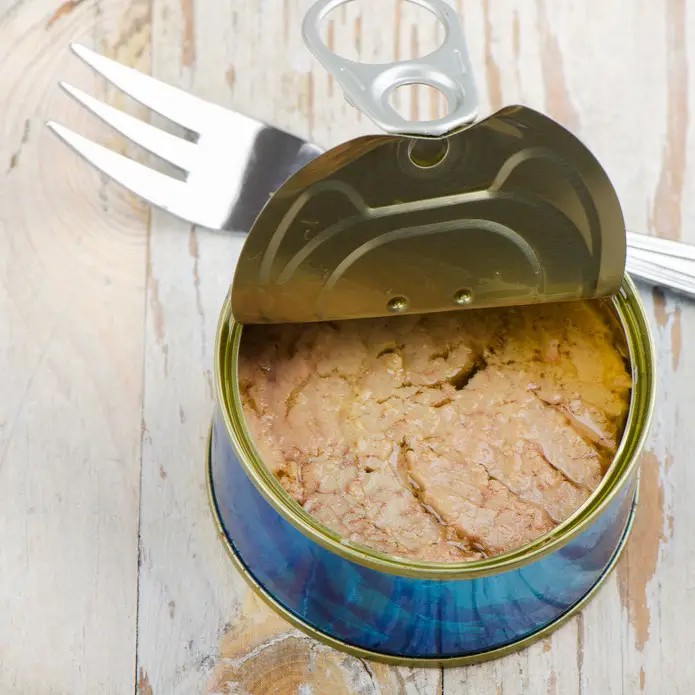
Canned tuna has long been a staple in pantries across America, prized for its convenience, affordability, and nutritional benefits. However, recent revelations have cast a shadow over this popular seafood. From price-fixing scandals to misleading labels and questionable processing techniques, the canned tuna industry is swimming in troubled waters.
1. The Great Tuna Price-Fixing Scandal
In a twist that would make even the wiliest of fish blush, major players in the canned tuna industry found themselves caught in a net of their own making. StarKist, Bumble Bee Foods, and Chicken of the Sea – names as familiar in American households as the smell of tuna salad – were accused of colluding to fix prices and limit competition in the canned tuna market. This wasn’t just a small fry operation; it was a full-scale conspiracy that sent ripples through the entire industry.
The U.S. Department of Justice launched an investigation in 2015, revealing that executives from these companies had been meeting regularly to discuss and coordinate their pricing strategies. It was like a secret underwater club, but instead of sharing fishing stories, they were plotting to keep prices artificially high. The consequences were far from trivial. StarKist pleaded guilty in 2018 and was slapped with a $100 million fine, while Bumble Bee Foods admitted to price-fixing in 2017 and had to cough up $25 million.
This scandal didn’t just leave a bad taste in consumers’ mouths; it fundamentally shook their trust in these longstanding brands. The industry has since been struggling to stay afloat in the choppy waters of public opinion. With the global canned tuna market expected to decline at a compound annual growth rate of 4.67% over the next five years, it’s clear that this scandal, combined with other factors like sustainability concerns and the impact of the COVID-19 pandemic, has left the industry floundering.
2. The Dolphin-Safe Debacle
Just when you thought it was safe to go back in the water, another controversy surfaced. Major U.S. canned tuna companies found themselves in hot water over claims that their “dolphin-safe” labels were nothing more than a fish tale. Chicken of the Sea, StarKist, and Bumble Bee Foods were accused of falsely marketing their products as dolphin-friendly when their fishing practices were actually causing harm to these intelligent marine mammals.
The 1990 Dolphin Protection Consumer Information Act was designed to prevent false labeling of tuna products as dolphin-safe. However, these companies allegedly chose to use fishing methods that were cheaper but more dangerous to dolphins, rather than adopting safer practices like pole-and-line and trolling methods. It’s like they were playing a game of Marco Polo with the truth, and the dolphins were caught in the middle.
This revelation led to proposed class-action lawsuits filed in federal court in California. The suits claim that these brands’ tuna fishing practices kill or harm substantial numbers of dolphins each year, despite their use of “dolphin-safe” logos on their products. It’s a classic case of companies trying to have their fish and eat it too, profiting from eco-friendly marketing while allegedly engaging in practices that are anything but friendly to marine life.
3. The Vitamin Tuna Treatment Travesty
If you thought the waters couldn’t get any murkier, brace yourself for the “vitamin tuna” scandal. This fishy practice involves injecting yellowfin and bigeye tuna with a cocktail of additives to enhance their appearance and increase their weight. It’s like a cosmetic surgery for fish, but with potentially harmful consequences for consumers.
According to seafood industry insiders, up to 60% of yellowfin tuna exported from Vietnam undergoes this dubious treatment. The process involves injecting the tuna with a saline solution and then bathing it in a mixture of beet juice, paprika, and additives like sodium ascorbate and ascorbic acid. This not only improves the color of lower-grade tuna but also adds water weight, increasing its value by 15-20%. It’s the fish equivalent of stuffing a turkey, except in this case, consumers are the ones getting stuffed – with potentially unsafe additives and inflated prices.
The most alarming aspect of this practice is the lack of transparency. These additives are often not properly disclosed on labels, leaving consumers in the dark about what they’re really eating. It’s a classic bait-and-switch, where what looks like high-quality tuna on the shelf might be nothing more than a cleverly disguised inferior product. This practice not only undermines consumer trust but also poses potential health risks, as the safety of these treated tuna products for human consumption remains questionable.
4. The Sustainability Struggle
In the vast ocean of tuna brands, navigating towards sustainability can feel like trying to find a specific fish in the sea. Different tuna species and fishing methods have varying impacts on marine ecosystems, making it crucial for consumers to understand what’s behind the label. It’s not just about catching tuna; it’s about ensuring there will be tuna to catch in the future.
Albacore tuna, often labeled as white tuna, presents a mixed bag in terms of sustainability. Some stocks are healthy, while others are struggling, making it difficult for consumers to make informed choices without knowing the specific source. Bigeye tuna, on the other hand, is listed as a vulnerable species and should be avoided altogether. It’s like playing Russian roulette with your tuna sandwich – you never know if you’re contributing to overfishing or supporting sustainable practices.
The method of fishing is just as important as the type of tuna. Conventional longlines and purse seines with fish aggregating devices (FADs) have higher rates of bycatch, unintentionally catching and often killing other marine life like sharks, turtles, and juvenile tuna. More sustainable options include handline, pole and line, and troll fishing. It’s a classic case of “it’s not what you catch, but how you catch it” that makes all the difference in preserving our oceans.
5. The Label Loopholes
When it comes to tuna labels, it’s not always smooth sailing for consumers trying to make informed choices. Certifications like Marine Stewardship Council (MSC) and Ocean Wise can indicate better sustainability practices, but they’re not foolproof. These labels are like lighthouses in a foggy sea – they provide some guidance, but you still need to navigate carefully.
Terms like “dolphin-safe” have been thrown around so much that they’ve almost lost their meaning. As we’ve seen with the recent lawsuits, even brands sporting this label may be engaging in practices that harm dolphins. It’s like being told a restaurant is “rat-free” – it should be a given, not a selling point. The country of origin and country of production can also be misleading, as tuna might be caught in one place, processed in another, and packaged in a third.
Even the type of tuna can be confusing. “Light tuna” isn’t a species but a commercial term that can refer to skipjack, yellowfin, or tongol tuna. It’s like ordering a “white fish” at a restaurant – you’re not really sure what you’re getting. These label loopholes make it challenging for consumers to make truly informed decisions about the tuna they’re buying.
6. The Quality Quandary
Not all canned tuna is created equal, and navigating the sea of options can be as challenging as reeling in a 500-pound bluefin. A recent ranking of top canned tuna brands revealed significant differences in quality, taste, texture, and sustainability practices. It’s like comparing apples to oranges, except in this case, it’s more like comparing sardines to swordfish.
The top-ranked brands, such as Sea Tales, Safe Catch, and Natural Sea, stood out for their commitment to sustainable fishing practices, superior taste, and firm texture. These brands are like the valedictorians of the tuna world – they’ve done their homework on sustainability and quality. On the flip side, some well-known brands fell short in these areas, proving that popularity doesn’t always equate to quality.
One of the biggest concerns with canned tuna is the potential for high mercury levels, especially in larger tuna species like bigeye and albacore. It’s like playing a game of heavy metal roulette with your diet. While tuna can be a healthy part of a balanced diet when consumed in moderation, the varying levels of mercury across different brands and species make it crucial for consumers to be well-informed about their choices.

